A good business video starts before the camera is switched on.
It starts with knowing what you want to say, who needs to hear it, and what will make the story feel like yours. A little preparation gives everyone more room to concentrate on the conversation, the people, and the details that make the finished film useful.
You do not need to arrive with filmmaking experience or a perfectly written script. Here are a few things worth thinking through before your shoot.
Start with what the audience should take away
Before choosing a location or planning individual shots, finish this sentence: “After watching, we want someone to…”
Understand your service? Meet the people behind your business? See what an event feels like? Feel more comfortable taking the next step?
At 2C Film Co, we come back to what your audience should feel, understand, and remember. That gives the production a direction. A film introducing a business to new customers may need a different approach from a short update for people who already know you.
Choose one main message. Supporting details can strengthen it, but a single video does not have to explain everything your business does.
Decide where the video will live
A homepage film, a social reel, and a presentation video have different jobs.
Tell us where you expect to use the finished content, including any vertical clips, captions, or shorter versions you may need. Those decisions can affect framing, interview questions, and the extra footage worth capturing.
It helps to identify the most important use first. From there, we can discuss which additional versions make sense for the project. Planning them early is easier than discovering afterward that an important shot does not fit the format you need.
For a real example of content across formats, explore our Pickle Social Club × Columbus Hotshots grand-opening project, which includes a hero film, social reels, and photography.
Choose the people and prepare the conversation
The best person to speak is often the person closest to the story. That might be an owner, a team member, or a customer who has agreed to participate.
Give each person a clear idea of the topic and enough notice to prepare. A few bullet points are usually a better starting point than asking someone to memorize a paragraph.
Think about specific examples: a problem you help solve, a detail customers often overlook, or a moment that explains why the work matters. Concrete stories give an interview more substance than a string of broad claims.
Practice explaining those ideas out loud. The aim is to feel familiar with the conversation while still leaving room for a natural answer.
Look at the location with fresh eyes
A space can look right and still be difficult to record in.
Listen for nearby traffic, background music, machinery, and conversations. Notice whether people will need to walk through the frame. Check how sunlight moves through the room, especially if an interview will take place over several hours.
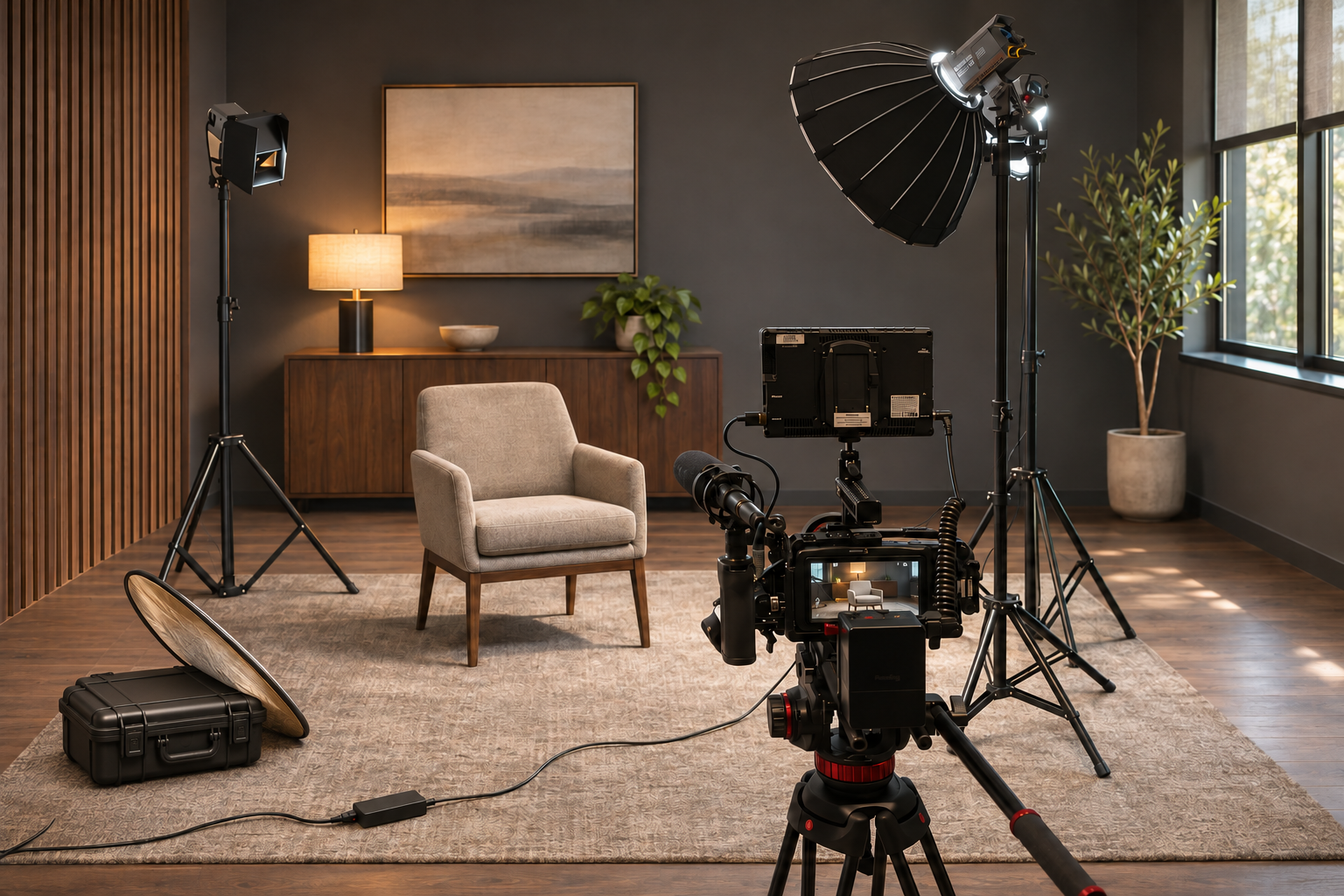
Share a few photographs of possible spaces beforehand. Include a wide view so there is a sense of room for the camera, lights, and the person being filmed.
You do not need a showroom-perfect location. An authentic workspace can say a lot about your business. Clear distracting clutter, set aside confidential information, and discuss access, power, and any restrictions before shoot day.
Have the small details ready
Choose clothing that feels appropriate to your role and comfortable to sit or move in. Very fine patterns, noisy jewelry, and fabrics that rustle can create distractions. Bringing an alternative outfit gives you options.
If products, tools, signage, or packaging are part of the story, have them clean and ready. Gather current logos and any brand guidelines you want the finished work to follow.
Make a short list of details that should appear on camera. Hands at work, a product in use, and the interactions between people can help connect an interview to what the business actually does.
Give the day room to work
Agree on who needs to be there, when the space will be available, and who can answer questions on the day. Allow time for setup and adjustments as well as filming.
Confirm permission to use the location and discuss anyone who may appear in the footage. If filming depends on weather or a working business staying open, talk through an alternative plan.
A clear point of contact helps keep practical decisions moving, so the people on camera can focus on what they are there to share.
Bring your story, and build from there
Preparation is about making space for good work. It helps turn a collection of shots into something coherent, personal, and useful to the people watching.
Based in Central Ohio, 2C Film Co creates content for businesses in Columbus and beyond. Explore our brand storytelling work and approach, or tell us about your upcoming project. Start with your audience, your idea, and where you hope to use the film. We can build the conversation from there.