When I first started diving deeper into filmmaking, I knew there was a lot I wanted to learn. What I didn’t fully appreciate was just how many different skills go into creating even a single polished piece of video.
It’s easy to look at a finished film and focus on what you see: the framing, the colors, the movement, and the overall cinematic feel.
But behind every shot is a series of decisions. And the more I learn, the more I realize how much those decisions depend on one another.
It Starts With the Camera
Learning to operate a cinema camera has been an experience of its own.
Understanding ISO, shutter angle, aperture, frame rates, white balance, lenses, and exposure isn’t just about memorizing settings. It’s about understanding how each adjustment affects the image and, ultimately, the story you’re trying to tell.
I’ve spent a lot of time experimenting with my Blackmagic Pocket Cinema Camera 4K, learning what works, what doesn’t, and why.
Sometimes that means getting a shot I’m genuinely excited about. Other times, it means reviewing footage and realizing something I thought I understood still needs work.
Both experiences are part of the process.
And while learning the camera is important, I’ve discovered it’s only one piece of a much larger puzzle.
Learning to See Light
Lighting has been one of the most interesting parts of the journey because it changes the way you look at everything.
A scene can be beautifully framed and properly exposed, but the lighting determines so much of how that image actually feels.
The direction of light, its intensity, its color, and the shadows it creates all contribute to the mood of a shot.
I’ve been learning how to work with natural light, how to shape artificial light, and how even small adjustments can completely change the appearance of a scene.
It’s also taught me that having lighting equipment and knowing how to use it effectively are two very different things.
The goal isn’t simply to make everything brighter.
It’s to understand what the light is communicating.
Then There’s Audio
One thing I’ve come to appreciate is just how important sound is to the entire experience.
You can capture an incredible image, but if the dialogue is difficult to understand or the audio feels disconnected from the scene, the entire production suffers.
Learning microphone placement, recording levels, monitoring, background noise, and audio editing has added another layer to the process.
And unlike the camera, where you can immediately see many of your mistakes, audio problems aren’t always obvious until you’re reviewing what you’ve recorded.
It’s another skill that requires patience, practice, and attention to detail.
Great filmmaking isn’t just about what the audience sees.
It’s also about what they hear—and how those sounds contribute to what they feel.
Bringing Everything Together
This is where things become both challenging and exciting.
Learning camera settings is one thing.
Learning lighting is another.
Learning audio is another.
But combining all three into a single production, while also thinking about composition, storytelling, continuity, editing, and color grading, is an entirely different challenge.
Suddenly, you’re not just concentrating on whether the camera is exposed correctly.
You’re thinking about where the light is coming from, whether the subject is in focus, whether the audio is clean, how the shots will connect in the edit, and whether everything you’re capturing is actually helping tell the story.
And sometimes you’re managing all of those responsibilities yourself.
It’s a lot to think about.
But I’m starting to realize that this is where the real growth happens.
Each project becomes an opportunity to connect what I’ve been learning individually and apply it to something complete.
The Process Is the Progress
There are definitely moments when the amount of information feels overwhelming.
Between learning equipment, understanding the technical side of production, practicing different techniques, and reviewing the results, there’s always something new to figure out.
But I’ve also learned that progress doesn’t always come from getting everything right the first time.
Sometimes it comes from recognizing what went wrong, understanding why, and approaching the next shoot differently.
Every time I set up the camera, adjust a light, record audio, or sit down to edit footage, I’m building on something I learned before.
And little by little, those individual skills are beginning to connect.
More Than Just a Camera
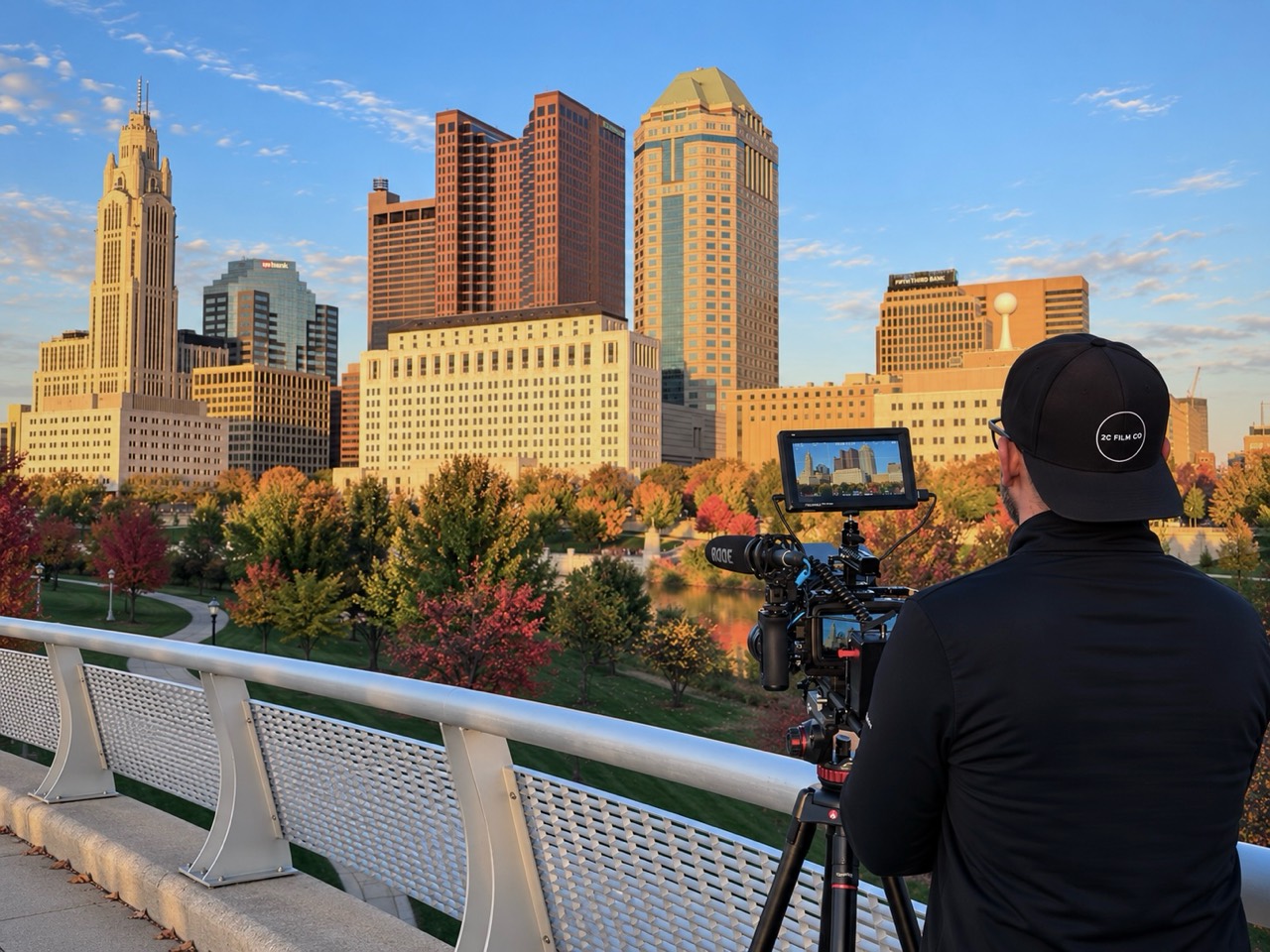
The photograph accompanying this post was taken overlooking the Columbus skyline, with me standing behind the camera.
For me, it represents more than learning how to capture a good image.
It represents the process of learning an entire craft.
The technical decisions. The creative decisions. The mistakes. The adjustments. And the satisfaction of watching everything come together.
I’m still learning. I’m still experimenting. And there are plenty of things I haven’t figured out yet.
But that’s also what makes this journey exciting.
Because the goal was never just to learn how to use a camera.
The goal is to learn how to tell a story—and understand every part of what it takes to bring that story to life.
— 2C Film Co