A website becomes part of the way a business works. Customers visit it to understand your services, see your work, and decide whether to get in touch. You return to it when a project is finished, a service changes, or there is something new to share.
That is why we think of a website as a digital asset: something built around your business, with a practical way to keep using it after launch.
At 2C Film Co., that means custom design, purposeful features, and an owner-friendly Control Center. Based in Central Ohio, we work with businesses in Columbus and beyond to bring those pieces together through a defined, one-time build.
Start with what the website needs to do
The first conversation is about your business. What do customers need to understand? What should happen when someone makes an inquiry? Which information changes regularly, and who will update it?
Those answers shape the pages, navigation, photography, copy, and features. A service company may need clear service areas and a straightforward inquiry process. A creative business may need a better way to organize projects and publish recent work.
The design should make those tasks feel natural. Thoughtful spacing, readable pages, and a considered mobile experience help visitors find their way. Visual polish matters most when it supports a clear next step.
Give the owner useful controls
The public website is only one side of the project. The editing experience matters too.
A customized Control Center organizes the parts of the website you will manage. Depending on the agreed build, that might include service descriptions, photographs, projects, articles, or business information. The controls should use familiar language and make it clear what will change on the public site.
Routine updates should feel manageable. More substantial changes can still be scoped separately when you need them. During handoff, we walk through the agreed controls and explain the accounts and services that keep the website running.
That gives the business a useful starting point for taking care of its own content.
AirBros: connecting the public site and the workspace
Our AirBros website project, currently in development, puts this approach into context.
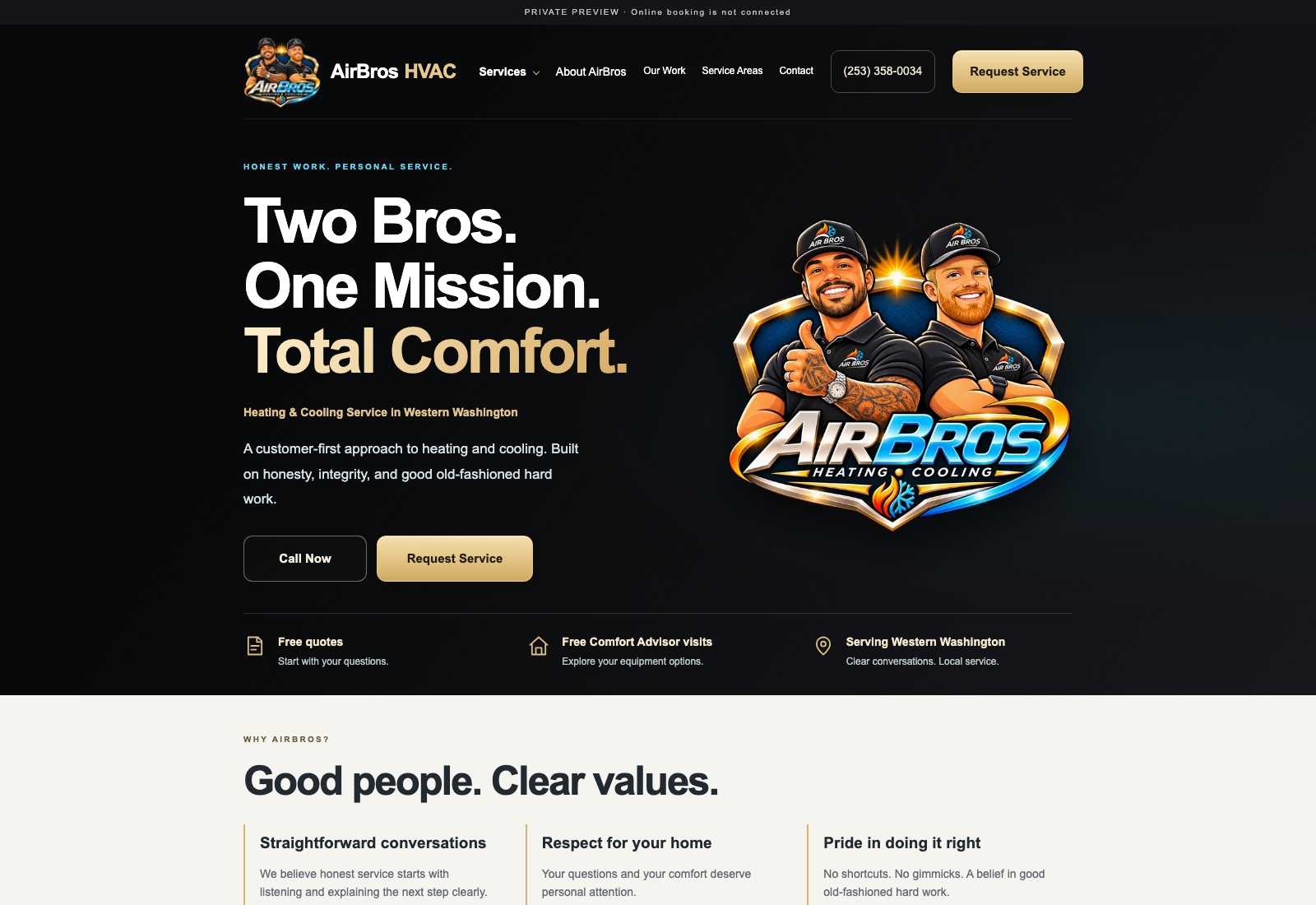
AirBros is a heating and cooling business in Washington state. The project brings together website design and functionality, social media setup, CRM connections, analytics, and an SEO foundation. The intention is to connect the experience customers see with the tools the business uses behind it.
The homepage preview accompanying this article shows the public-facing design. Its Control Center preview shows how services, service areas, business information, website text, and completed work can be organized for the owner. The dashboard uses demonstration data, rather than live customer records.
These are previews of a developing project, not a claim about completed launch results. They show the direction: a distinctive website supported by a workspace that makes everyday updates easier to understand.
Build discovery and measurement into the foundation
A strong website needs clear structure as well as a visual identity. Descriptive titles, useful headings, relevant service information, and sensible links help people and search engines understand what each page offers.
Analytics can help answer what happens after someone finds the site. Which pages are people visiting? Where do inquiries begin? Are the forms recording successful submissions?
Search and reporting connections are scoped around the project, with appropriate privacy controls. They provide a foundation for learning, rather than a promise of rankings or a guaranteed number of leads.
The same approach applies to scheduling, CRM, and other integrations: each connection should serve a specific workflow and have clear account, access, and operating requirements.
Keep ownership, support, and operating costs clear
The website build has an agreed scope, deliverables, and handoff. Future assistance, content work, maintenance, or new features can be requested and invoiced separately. An ongoing marketing retainer is not a condition of the website build.
A one-time build still relies on services that may have recurring costs. Domain registration, hosting, and third-party subscriptions or usage fees remain separate. The agreement should identify those responsibilities before launch.
Ownership also needs to be specific. Client content, agreed custom deliverables, account access, reusable 2C software, and third-party licenses are distinct parts of the project. We define those boundaries so owner control has a practical meaning.
Leave room for the next useful tool
Some businesses need more than content pages. A carefully scoped estimator, booking workflow, or other custom feature may help connect the website to everyday operations.
We are also developing a separate estimating product under the working name 2C Instant Estimator. Its features, availability, and license terms will be defined before release. It is separate from a standard website build.
The starting point is your business and what you need to make easier. Explore our website design and development service, see the AirBros preview, or request a walkthrough. We can show you the public experience, the controls behind it, and how a defined build could work for you.