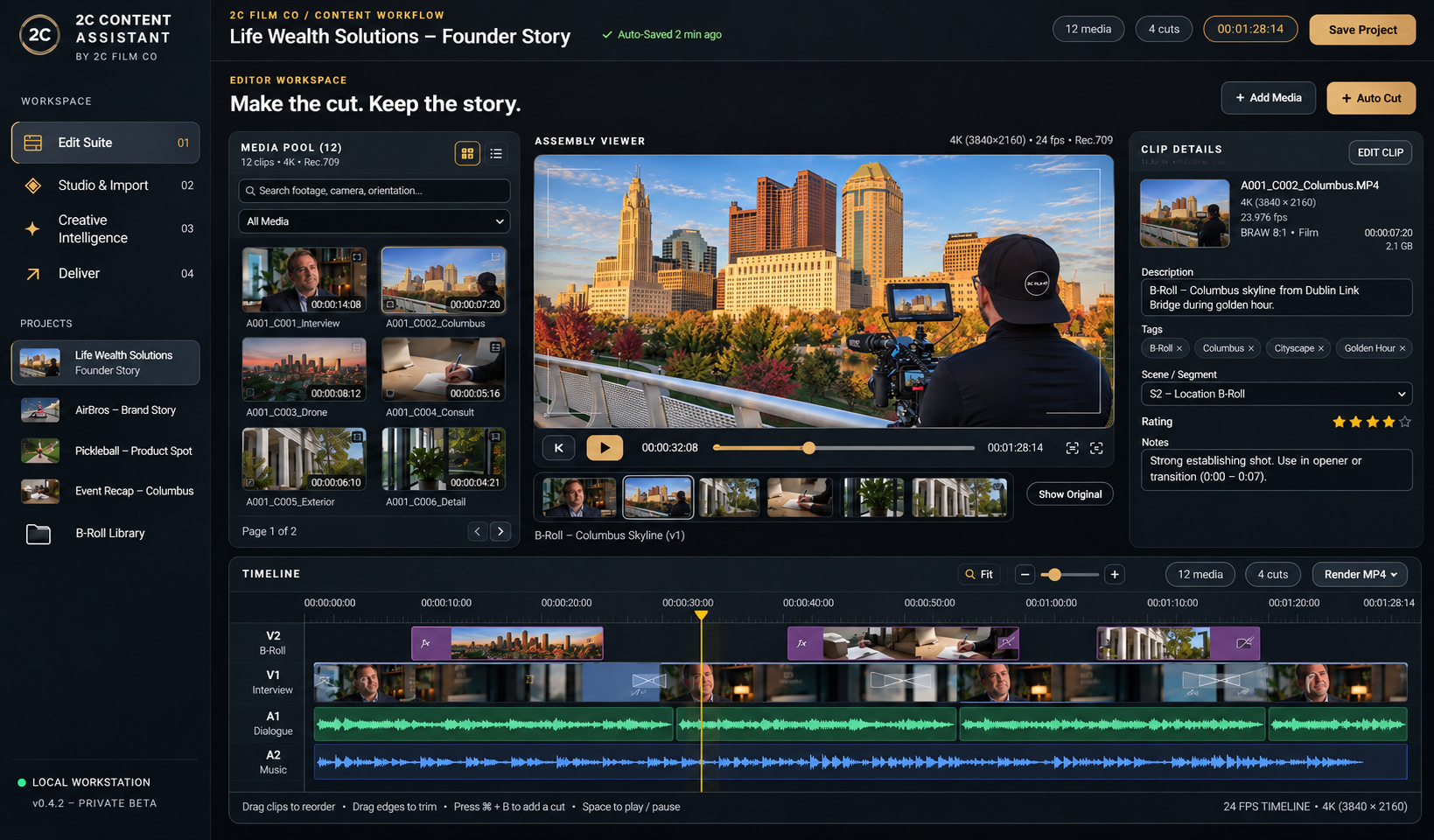
A strong edit starts long before the color grade. It starts with finding the moments that matter, shaping a story, and turning a folder full of footage into something you can work with.
KINESIS is AI-assisted post-production software being developed and coded by Scott Clemmons through 2C Content Studio, the content creation division of 2C Film Co. It brings a filmmaker’s experience into a practical editing workflow, with a clear purpose: reduce the time and effort between importing footage and making creative decisions.
The software is in development. The workspace shown here offers a first look at the direction we’re building.
Built from time spent in the edit
After a two-day pickleball event, Scott spent roughly 14 hours reviewing footage. That kind of work is familiar to anyone who has opened a large media folder after a shoot: interviews, alternate angles, repeated takes, detail shots, and the moments you know are somewhere in the collection.
Those experiences shaped KINESIS. The goal is to reclaim hours from footage preparation and give that time back to the story, the finishing, and the next project.
A more useful culling process
Culling means reviewing footage and deciding what deserves a place in the edit. Across dozens or hundreds of files, those small decisions can become a substantial part of post-production.
KINESIS is being designed to help organize that review, suggest useful selections and trims, and carry promising moments forward into an assembly. The focus is on making a large collection easier to navigate and giving the editor a clearer starting point.
The intended experience keeps the footage close to the decisions. Review a clip, adjust its place in the story, and shape the cut from the same workspace.
Content shaped around the brief
A production often needs more than one finished video. A business might need a main story, several cinematic reels, and focused pieces for social platforms.
The creative direction for KINESIS includes specifying the number and type of pieces you want to create, then using AI to help build those edits from the available footage. That could mean pulling together a set of event reels or developing shorter stories around an interview.
The aim is to move from a broad request—“we need content from this shoot”—toward a useful set of assembled pieces, each with a purpose.
A timeline you can keep shaping
Speed matters most when it comes with flexibility. The assistant is being developed around an editable timeline, with video and audio brought together so the work can keep moving.
You should be able to inspect the selections, change a trim, rearrange a moment, and refine the pacing. The creative judgment remains with the person making the film. AI provides a starting assembly that the editor can evaluate and develop.
That balance is central to the product: a simpler path through the repetitive work, with room to make the finished piece your own.
A better start for DaVinci Resolve
The intended workflow carries the assembly into DaVinci Resolve for final review, any further adjustments, color grading, and delivery. Bringing video and audio into a prepared timeline is meant to reduce the setup between an initial idea and a finished edit.
We’re developing that handoff alongside the editing experience, with attention to the way real productions move from preparation into finishing.
Part of 2C Content Studio
2C Content Studio is the home for the content creation tools we’re developing at 2C Film Co. KINESIS is the first expression of that direction: software shaped by the work of making films and delivering content for real clients.
The ambition is straightforward. Less time sorting. A more useful first cut. More attention available for the story people will feel, understand, and remember.